Wallwrap Hoarding - Jharsuguda - Jharsuguda Rajpur
| vwagromh, wharsuggeeas Ntpc Darlipali Rd, Rajpur, Odisha 768216, India, Jharsuguda, Odisha
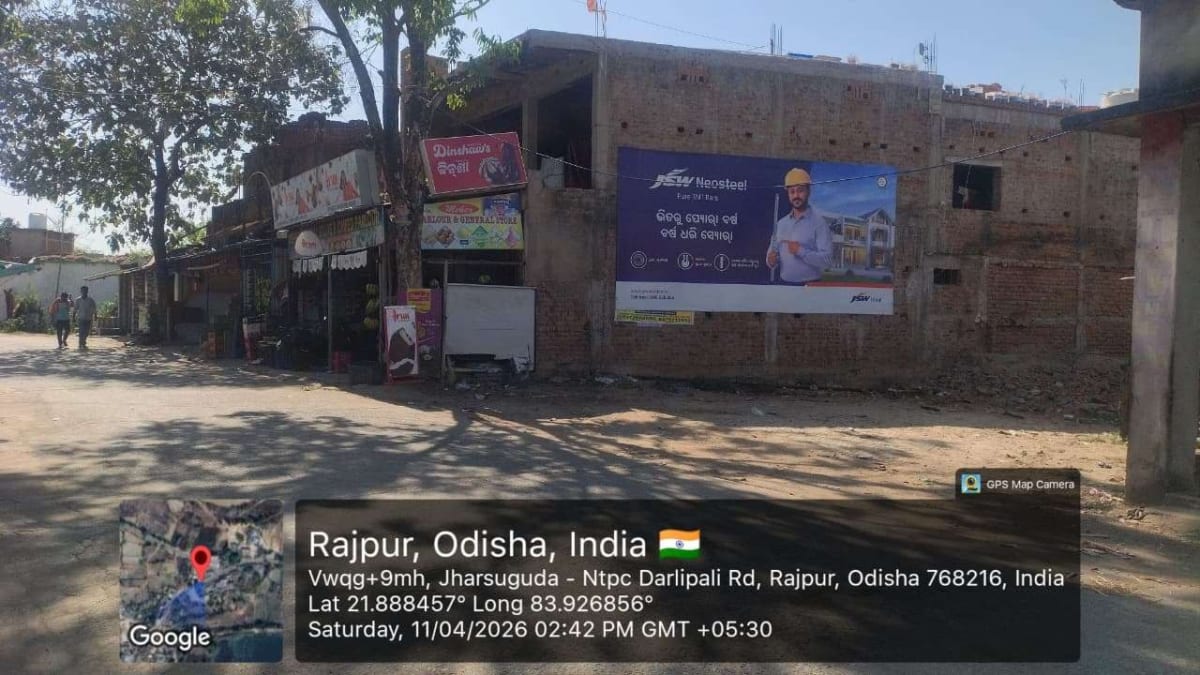
Property Details
Property TypeHoarding
Lit TypeNon-Lit
Size (W x H)20 x 15 Feet
Square Feet300 sq ft
Traffic Data32k+ unique reach/ week
AvailableImmediately
Rate per Sq Ft₹15 / sq ft
Description
 AI Insights by HoardSpace
Overview
This wallwrap hoarding is strategically positioned on NTPC Darlipali Road in Rajpur, Jharsuguda district, Odisha. The location serves as a vital connector between residential colonies and the NTPC Darlipali thermal power plant township, ensuring consistent daily exposure to a mixed audience of industrial workers, local residents, and commercial traffic. With dimensions of 20 ft × 15 ft, this hoarding offers substantial visibility at an exceptionally affordable monthly rate of ₹4,500, making it ideal for local businesses and regional brands seeking cost-effective outdoor advertising in Odisha's industrial heartland.
Location Highlights
Rajpur is situated in Jharsuguda district, a key industrial zone in western Odisha. The area benefits from proximity to major industrial establishments including NTPC Darlipali, one of India's significant thermal power plants. The surrounding locality features a mix of industrial townships, residential colonies, and supporting commercial infrastructure. The road connects multiple residential pockets with the industrial area, creating steady commuter movement throughout the day. Jharsuguda town center lies approximately 8–12 km away, while Jharsuguda Airport and Railway Station provide regional connectivity.
Traffic & Footfall Insights
Approximate estimates for this locality suggest:
-
Estimated Daily Vehicle Traffic: 8,000–18,000 vehicles/day — primarily comprising employee commutes, industrial transport, local two-wheelers, and commercial vehicles serving the NTPC township and surrounding residential areas.
-
Estimated Daily Footfall: 1,200–3,500 pedestrians/day — consisting of industrial workers, local residents, shop visitors, and students from nearby educational facilities.
-
Peak Activity Periods: 6:30 AM–9:00 AM (morning shift commute), 4:00 PM–7:00 PM (evening return traffic), and 12:00 PM–1:30 PM (lunch hour movement).
-
Primary Audience: Industrial employees, middle-income families, local traders, delivery personnel, and township residents with stable purchasing power.
-
Advertising Potential: The consistent daily commuter pattern creates high-frequency exposure, particularly valuable for local services, consumer goods, and community-focused messaging.
Important: These traffic and footfall figures are locality estimates based on the area's industrial-residential profile and are not measured statistics specific to this hoarding.
Hoarding Specifications
- Dimensions: 20 ft (Width) × 15 ft (Height)
- Total Display Area: 300 sq ft
- Monthly Rental Price: ₹4,500
- Property Type: Hoarding (Wallwrap)
- Lighting: Non-Lit (daylight visibility only)
- Visibility: Clear sightlines along NTPC Darlipali Road with moderate traffic speed
- Suitable Advertisement Size: Full 20×15 ft creative recommended for maximum impact
Best Suited For
- Local retail stores and supermarkets
- Banking and financial services
- Telecom and mobile operators
- Educational institutions and coaching centers
- Healthcare clinics and diagnostic centers
- Consumer electronics and home appliances
- Automotive servicing and spare parts
- FMCG and daily essentials brands
- Real estate projects in Jharsuguda district
Why Choose This Hoarding?
- Exceptional Value: Monthly cost of just ₹4,500 delivers outstanding ROI for local advertisers
- Captive Industrial Audience: Consistent exposure to NTPC employees and industrial workforce with stable income
- Daily Commuter Frequency: Same viewers pass multiple times daily, reinforcing brand recall
- Strategic Industrial Location: Positioned in Odisha's growing industrial corridor with expanding commercial activity
- Regional Brand Building: Ideal for establishing presence in Jharsuguda's emerging market
Campaign Suggestions
- Promote banking services targeting salaried industrial employees with loan and savings schemes
- Advertise local retail offers, grocery stores, or home delivery services for township residents
- Launch educational coaching centers or skill development programs for workers' families
- Highlight healthcare facilities, diagnostic centers, or pharmacy services for the local community
- Showcase real estate projects appealing to industrial employees seeking residential investments
Important Note
The estimated daily vehicle traffic (8,000–18,000 vehicles/day), footfall (1,200–3,500 pedestrians/day), and weekly unique reach figures are approximate estimates for the surrounding locality based on its industrial-residential character. These are not measured statistics of the hoarding itself. Reliable public traffic measurements for this specific location are unavailable. Actual exposure may vary based on seasonal factors, industrial activity cycles, and commuter patterns.
Select Campaign Dates
Start Date
Months
End Date (Calculated)
Pricing Details
Monthly Rent Price₹4,500
₹3,600
Mounting Charges (₹5/sqft)₹1,500
Printing and mounting are one-time charges. For subsequent months, only the rent will be applicable.
Total CostDuration: 1.0 Months
₹9,600+ GST
Location Map
Open in Google MapsEstimated Audience Demographics
AI Insights by HoardSpaceEstimated composition of the audience near this site, inferred from its location and the surrounding area.
Gender
- Male65%
- Female35%
Age groups
- 13–1712%
- 18–2418%
- 25–3428%
- 35–4424%
- 45–5413%
- 55+5%
Most spoken languages
Shares overlap — people speak more than one language.
- Odia~85%
- Hindi~55%
- English~25%
AI-generated estimates based on available location and audience signals. Not verified audience measurements. Estimated 29 Aug 2026.
Recommended Hoardings
Other listings near this location.