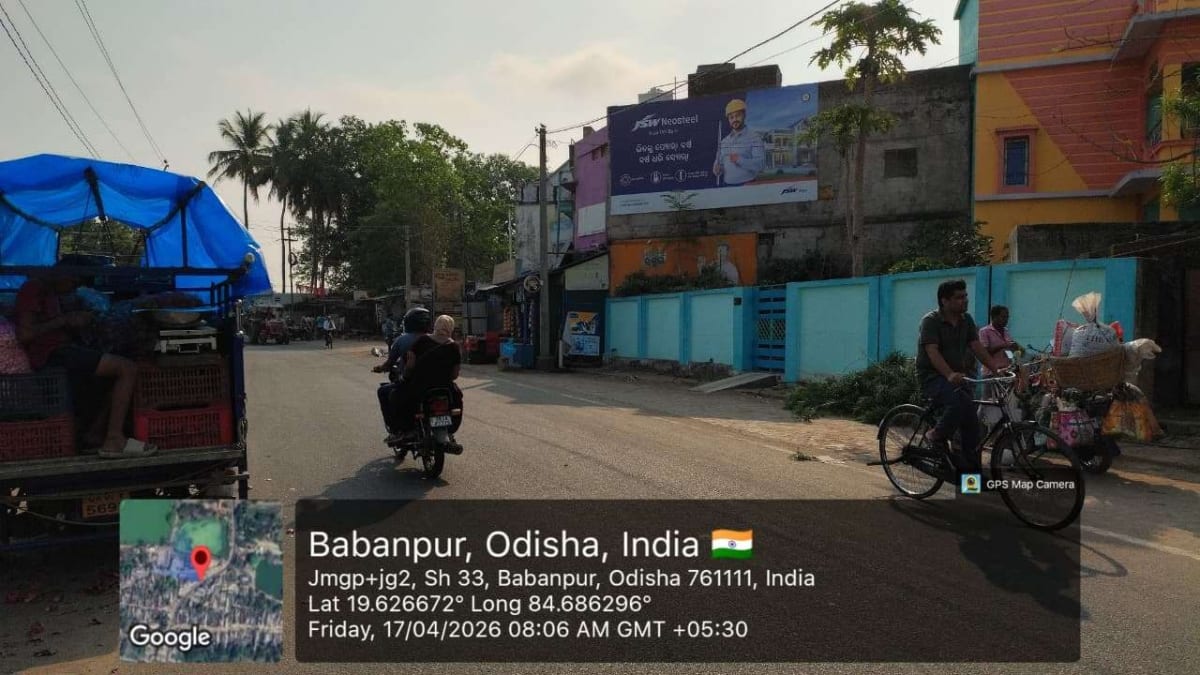
Wallwrap Hoarding - Ganjam - Ganjam Babanpur
Jmgp+jg2, Sh 33, Babanpur, Odisha 761111, India, Ganjam, Odisha
Property Details
Property TypeHoarding
Lit TypeNon-Lit
Size (W x H)20 x 10 Feet
Square Feet200 sq ft
Traffic Data22k+ unique reach/ week
AvailableImmediately
Rate per Sq Ft₹20 / sq ft
Description
 AI Insights by HoardSpace
Overview
This wallwrap hoarding is located in Babanpur, Ganjam district, Odisha, positioned along State Highway 33 (SH 33). The site serves as a key advertising location on a state highway connecting rural and semi-urban localities in the Ganjam region. With dimensions of 20 ft × 10 ft, this hoarding offers affordable visibility for brands targeting local and regional audiences traveling through this corridor.
Location Highlights
Babanpur is a developing locality in Ganjam district, situated along SH 33, which connects several towns and villages in southern Odisha. The area is characterized by a mix of residential settlements, small-scale commercial establishments, agricultural activity, and local markets. The highway serves as a primary route for inter-town connectivity, linking Ganjam district towns with regional centers. The locality experiences moderate vehicular movement, primarily consisting of local commuters, agricultural transport vehicles, two-wheelers, auto-rickshaws, and occasional intercity buses. Nearby areas may include small retail shops, local schools, and community facilities typical of semi-urban Odisha.
Traffic & Footfall Insights
Estimated Daily Vehicle Traffic: Approximate estimates suggest 8,000–18,000 vehicles/day along this section of SH 33, primarily comprising local commuters, two-wheelers, and commercial vehicles.
Estimated Daily Footfall: The surrounding locality may experience 1,500–5,000 pedestrians/day, including local residents, shoppers, and students.
Peak Activity Periods: Typical traffic peaks occur during 7:00 AM–9:00 AM and 5:00 PM–7:00 PM on weekdays, with increased movement during market days and local festivals.
Primary Audience: Local residents, farmers, small business owners, daily commuters, intercity travelers, students, and families from surrounding villages.
Advertising Potential: This location is well-suited for brands targeting semi-urban and rural audiences in Ganjam district. The hoarding offers consistent visibility to highway traffic and is ideal for local businesses, regional FMCG brands, agricultural products, educational institutions, and government awareness campaigns. Reliable public measurements are unavailable; figures represent locality-based estimates.
Hoarding Specifications
- Dimensions: 20 ft (Width) × 10 ft (Height)
- Total Display Area: 200 sq ft
- Monthly Price: ₹4,000
- Property Type: Hoarding (Wallwrap)
- Lighting: Non-Lit
- Visibility: Clear visibility to highway traffic in both directions
- Suitable Advertisement Size: Standard flex printing; simple, bold messaging recommended for non-lit display
Best Suited For
Local retail businesses, regional FMCG brands, agricultural input suppliers (seeds, fertilizers, pesticides), educational institutions, healthcare services, microfinance institutions, mobile network operators, government awareness campaigns, and local events.
Why Choose This Hoarding?
- Affordable monthly rental makes it accessible for small and medium businesses
- Strategic location on State Highway 33 ensures consistent regional traffic exposure
- Serves a semi-urban audience with growing purchasing power and brand awareness
- Ideal for long-term local brand building and community engagement
- Suitable for campaigns targeting rural-to-urban transitional markets in Ganjam district
Campaign Suggestions
- Promote local retail offers, seasonal sales, and festive discounts for nearby businesses
- Advertise agricultural products, crop solutions, and farming equipment for the rural audience
- Highlight educational institutions, coaching centers, and skill development programs
- Campaign for regional FMCG brands, dairy products, beverages, and consumer goods
- Support government health, sanitation, and financial inclusion initiatives
Important Note
The estimated daily vehicle traffic (8,000–18,000 vehicles/day), daily footfall (1,500–5,000 pedestrians/day), and weekly unique reach (22,000) are approximate estimates based on the surrounding locality's characteristics and are not measured statistics of this specific hoarding. Actual exposure may vary depending on seasonal factors, local events, and traffic patterns.
Select Campaign Dates
Start Date
Months
End Date (Calculated)
Pricing Details
Monthly Rent Price₹4,000
₹2,400
Mounting Charges (₹5/sqft)₹1,000
Printing and mounting are one-time charges. For subsequent months, only the rent will be applicable.
Total CostDuration: 1.0 Months
₹7,400+ GST
Location Map
Open in Google MapsEstimated Audience Demographics
AI Insights by HoardSpaceEstimated composition of the audience near this site, inferred from its location and the surrounding area.
Gender
- Male55%
- Female45%
Age groups
- 13–1712%
- 18–2418%
- 25–3428%
- 35–4422%
- 45–5413%
- 55+7%
Most spoken languages
Shares overlap — people speak more than one language.
- Odia~85%
- Hindi~35%
- Telugu~15%
AI-generated estimates based on available location and audience signals. Not verified audience measurements. Estimated 29 Aug 2026.
Recommended Hoardings
Other listings near this location.