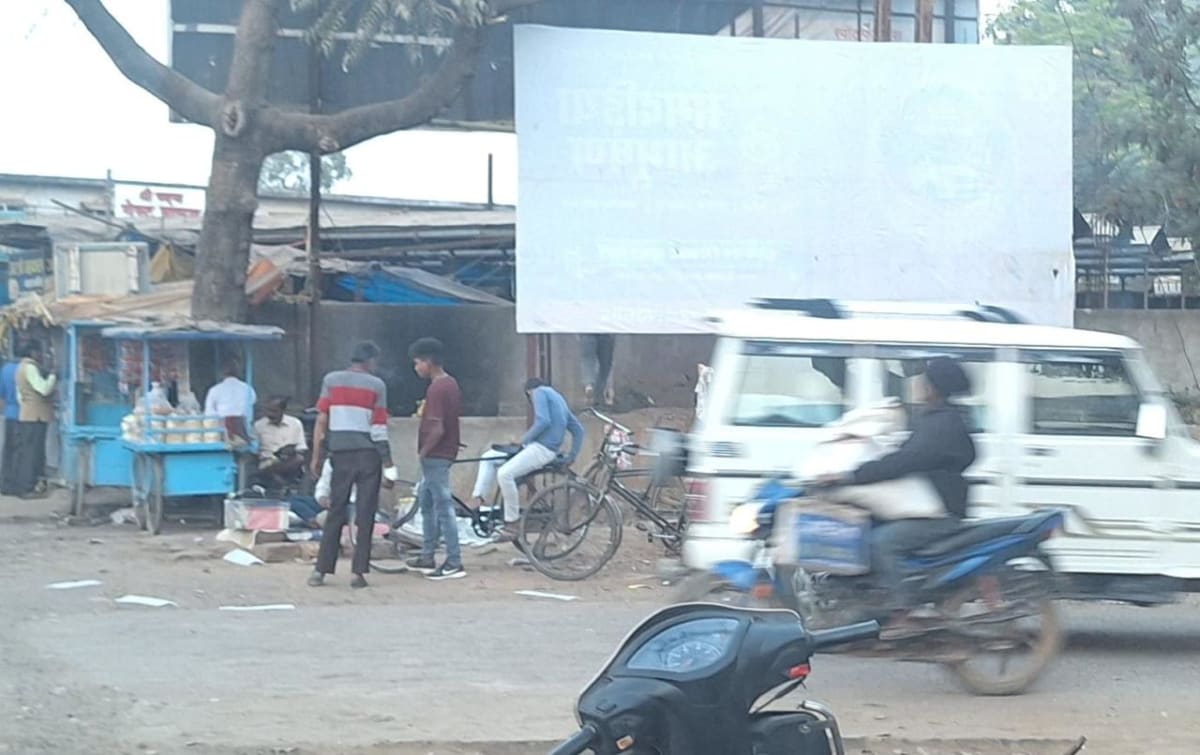
Hoarding - Katni Murwara Station (Front Site)
Katni Murwara Station (Front Site), Katni, Madhya Pradesh
Property Details
Property TypeHoarding
Lit TypeNon-Lit
Size (W x H)20 x 10 Feet
Square Feet200 sq ft
Traffic Data68k+ unique reach/ week
AvailableImmediately
Rate per Sq Ft₹80 / sq ft
Description
 AI Insights by HoardSpace
Overview
This hoarding is strategically positioned at the front of Katni Murwara Station, one of the major railway junctions in Madhya Pradesh. Katni serves as a critical connectivity hub on the Indian Railways network, linking the northern, southern, eastern, and western railway zones. The station witnesses significant daily passenger movement, making this location valuable for brands seeking consistent exposure to a diverse traveling audience comprising business travelers, students, tourists, and daily commuters.
Location Highlights
Katni Murwara Station is located in Katni district, a significant commercial and transport hub in Madhya Pradesh. The station area is characterized by moderate commercial activity with hotels, eateries, and small retail establishments catering to railway passengers. The surrounding locality experiences steady pedestrian movement throughout the day due to station operations. Being a major railway junction, the area connects to important cities including Jabalpur, Satna, Panna, and numerous other destinations. The station's front area sees continuous activity from passengers, auto-rickshaws, taxis, and local transport services.
Traffic & Footfall Insights
Estimated Daily Vehicle Traffic: Approximate estimates suggest 8,000–18,000 vehicles/day in the immediate station vicinity, including auto-rickshaws, taxis, private vehicles, and two-wheelers.
Estimated Daily Footfall: The station front typically experiences 15,000–35,000 pedestrians/day, consisting primarily of railway passengers, station staff, and visitors.
Peak Activity Periods: Maximum passenger movement occurs during 6:00 AM–9:00 AM and 5:00 PM–9:00 PM, coinciding with major train arrivals and departures.
Primary Audience: Railway passengers from diverse socio-economic backgrounds, including daily commuters, long-distance travelers, business professionals, students, and families. The audience represents a mix of urban and rural demographics from across Madhya Pradesh and neighboring states.
Advertising Potential: The station front location offers prolonged visibility as passengers approach, enter, and exit the station premises. However, the non-lit specification limits nighttime visibility, which is a consideration given that significant railway activity occurs during evening and early morning hours.
Hoarding Specifications
- Dimensions: 20 ft (W) × 10 ft (H) – 200 sq ft display area
- Monthly Price: ₹16,000
- Property Type: Hoarding
- Lighting: Non-Lit (daylight visibility only)
- Visibility: Direct frontal view for passengers approaching the station entrance
- Suitable Advertisement Size: Full 20×10 ft for maximum impact
Best Suited For
- Railway ticketing platforms and IRCTC services
- Regional FMCG brands and beverages
- Mobile network providers and recharge services
- Regional banks and financial services
- Government awareness campaigns and public health messaging
- Educational institutions and competitive exam coaching centers
- Local hospitality and food delivery services
Why Choose This Hoarding?
- Located at a major railway junction with connections to multiple states
- Consistent daily exposure to thousands of railway passengers
- Captures attention of travelers during station approach and entry
- Affordable monthly pricing suitable for regional and local brands
- Targets diverse demographic groups traveling through central India
- Ideal for building brand recall among frequent railway commuters
Campaign Suggestions
- Launch regional products with high-frequency messaging targeting railway passengers
- Promote mobile recharge, digital payment, and travel convenience services
- Advertise local hospitality services, hotels, and food options for travelers
- Run educational institution campaigns targeting students traveling for exams
- Display government schemes and public welfare programs for mass awareness
Important Note
The traffic, footfall, and reach figures provided are approximate estimates based on the locality's characteristics as a railway station area. These are not measured statistics specific to this hoarding. Actual visibility and audience exposure depend on factors including train schedules, seasonal travel patterns, and passenger flow variations throughout the day.
Select Campaign Dates
Start Date
Months
End Date (Calculated)
Pricing Details
Monthly Rent Price₹16,000
₹2,400
Mounting Charges (₹5/sqft)₹1,000
Printing and mounting are one-time charges. For subsequent months, only the rent will be applicable.
Total CostDuration: 1.0 Months
₹19,400+ GST
Location Map
Open in Google MapsRecommended Hoardings
Other listings near this location.