Hoarding - Nua Pada fac Nua Bazar NR Narayan School
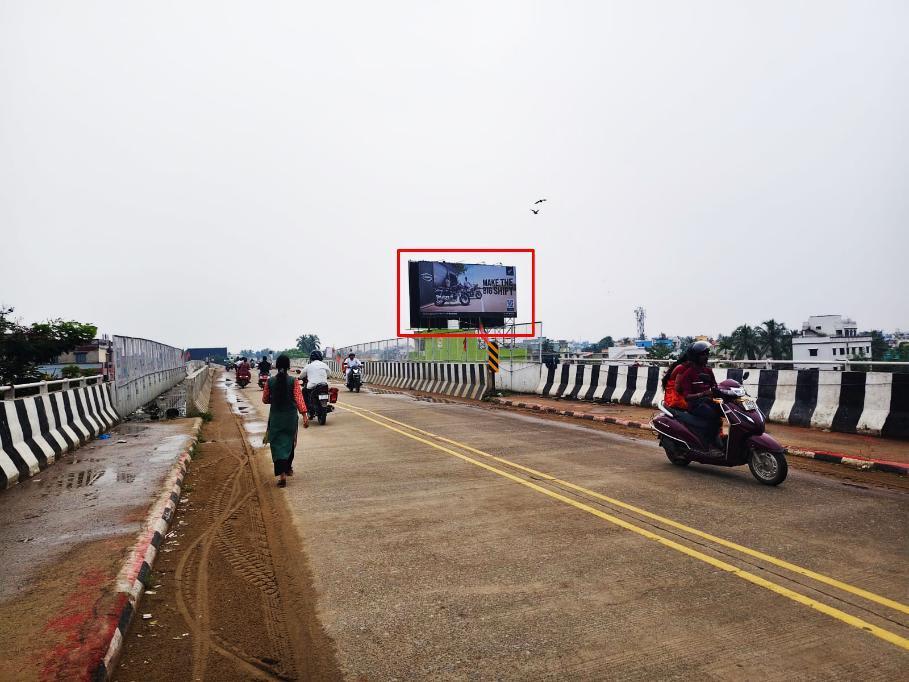
Nua Pada fac Nua Bazar NR Narayan School , Cuttack Town, Odisha
Property Details
Property TypeHoarding
Lit TypeNon-Lit
Size (W x H)45 x 20 Feet
Square Feet900 sq ft
Traffic Data34k+ unique reach/ week
AvailableImmediately
Rate per Sq Ft₹84 / sq ft
Description
 AI Insights by HoardSpace
Overview
This 45 ft × 20 ft non-lit hoarding is located at Nua Pada facing Nua Bazar, near Narayan School, in the Cuttack Town area of Odisha. Positioned in a mixed-use locality with residential, educational, and commercial elements, this hoarding offers consistent visibility to local commuters, students, parents, and shoppers navigating the Nua Bazar marketplace and its surrounding streets.
Location Highlights
Nua Pada is part of Cuttack Town, a densely populated urban center in Odisha with a strong commercial and educational presence. The hoarding is situated facing Nua Bazar—a local market area that serves as a retail and trading hub for daily essentials, groceries, textiles, and consumer goods. Its proximity to Narayan School adds substantial daytime traffic from students, parents, teaching staff, and service vehicles. The surrounding area is characterized by narrow commercial lanes, mixed residential blocks, and active pedestrian movement during market hours. Cuttack Town is well-connected by road to other parts of Cuttack district and serves as a commercial gateway for nearby semi-urban and rural populations.
Traffic & Footfall Insights
Approximate estimates suggest the surrounding locality experiences 8,000–18,000 vehicles per day, including two-wheelers, auto-rickshaws, cars, and light commercial vehicles. The road serves local and intra-city traffic, with volume influenced by school timings and market activity.
Estimated Daily Footfall: 3,000–8,000 pedestrians, primarily market visitors, students, residents, and shoppers accessing Nua Bazar and nearby retail outlets.
Peak Activity Periods:
- Morning: 7:30 AM–9:30 AM (school drop-offs, early market activity)
- Midday: 11:00 AM–1:00 PM (market shopping peak)
- Evening: 4:00 PM–7:00 PM (school pickups, evening shopping)
Primary Audience: Middle-income families, students, homemakers, local traders, small business owners, and daily commuters.
Advertising Potential: The hoarding's positioning near a school and active bazar makes it highly suitable for brands targeting families, students, and local consumers. Repeated daily exposure from school and market routines enhances brand recall.
Hoarding Specifications
- Dimensions: 45 ft (W) × 20 ft (H)
- Total Area: 900 sq. ft.
- Monthly Price: ₹75,500
- Property Type: Hoarding
- Lighting: Non-Lit
- Visibility: High during daylight hours; moderate in evening due to non-lit status
- Suitable Advertisement Size: Large-format branding with bold visuals and minimal text for quick readability
Best Suited For
Educational institutions, coaching centers, stationery and books, FMCG brands, dairy and packaged foods, mobile and electronics, apparel and footwear, banking and financial services, healthcare and clinics, local retail chains, real estate, and automobile dealerships.
Why Choose This Hoarding?
- Located at a high-footfall intersection near a school and active local market
- Captures daily attention from students, parents, shoppers, and commuters
- Large 900 sq. ft. canvas ideal for impactful brand messaging
- Consistent visibility throughout the day in a densely populated locality
- Affordable pricing for sustained local market penetration
- Suitable for both hyperlocal campaigns and regional brand launches
Campaign Suggestions
- Launch back-to-school promotions for stationery, uniforms, and books
- Promote banking services, loan products, and insurance schemes for families
- Advertise dairy brands, beverages, and packaged snacks targeting daily shoppers
- Highlight coaching centers, skill development programs, and career guidance services
- Introduce healthcare services, diagnostic centers, and pharmacies to local residents
Important Note
Traffic, footfall, and reach figures provided are approximate estimates based on the characteristics of the surrounding locality. These are not measured statistics specific to the hoarding. Actual exposure may vary based on seasonal patterns, local events, road conditions, and campaign execution quality.
Weekly Unique Reach
Approximate estimates suggest this hoarding may reach around 34,000 unique individuals per week, accounting for repeated daily commuters, students, and market visitors in the Nua Pada and Nua Bazar locality.
Select Campaign Dates
Start Date
Months
End Date (Calculated)
Pricing Details
Monthly Rent Price₹75,500
₹10,800
Mounting Charges (₹5/sqft)₹4,500
Printing and mounting are one-time charges. For subsequent months, only the rent will be applicable.
Total CostDuration: 1.0 Months
₹90,800+ GST
Location Map
Open in Google MapsRecommended Hoardings
Other listings near this location.