Billboard - Jhanda Chowk
Jhanda Chowk, Purnia, Bihar
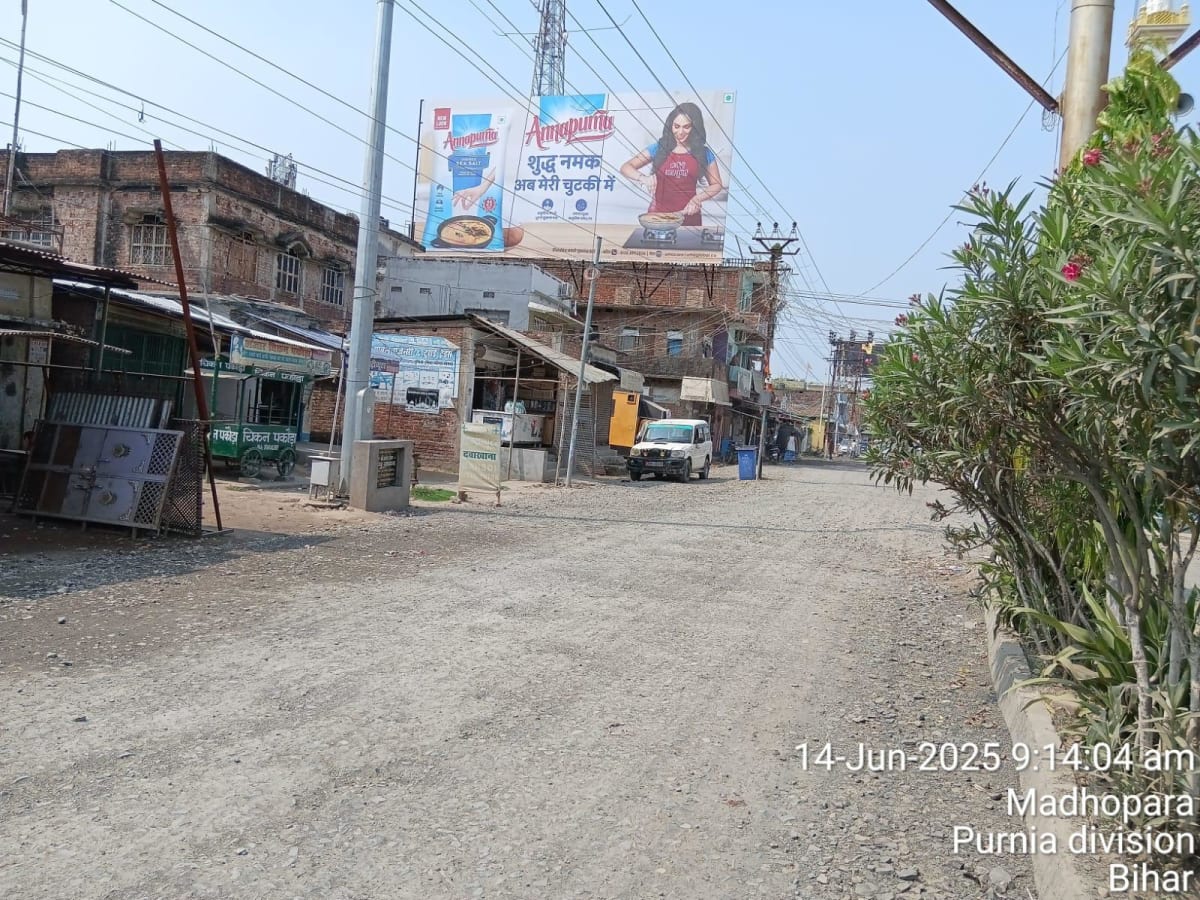
Property Details
Property TypeHoarding
Lit TypeNon-Lit
Size (W x H)50 x 25 Feet
Square Feet1250 sq ft
Traffic Data48k+ unique reach/ week
AvailableImmediately
Rate per Sq Ft₹53 / sq ft
Description
 AI Insights by HoardSpace
Overview
This 50 ft × 25 ft hoarding is strategically located at Jhanda Chowk in Purnia, Bihar. Jhanda Chowk serves as a prominent intersection in the city, positioned along key commercial and residential corridors. Purnia is an important district headquarters in the Kosi division, known for its agricultural trade, educational institutions, and growing commercial activities. The hoarding's substantial size and central location make it suitable for brands seeking visibility in one of Bihar's emerging tier-3 cities.
Location Highlights
Jhanda Chowk is a well-known landmark junction in Purnia, functioning as a major traffic convergence point. The area is characterized by:
- Mixed commercial and residential development
- Proximity to local markets and retail zones
- Access to government offices and civic amenities
- Connectivity to main roads leading toward NH 27 and other arterial routes
- Presence of educational institutions, banks, and healthcare facilities in the vicinity
Purnia itself serves as a commercial hub for the surrounding agricultural belt, attracting daily commuters from nearby towns and rural areas for trade, education, and administrative work.
Traffic & Footfall Insights
Estimated Daily Vehicle Traffic: Approximate estimates suggest 12,000–28,000 vehicles/day, including two-wheelers, auto-rickshaws, cars, and commercial vehicles. Traffic tends to be consistent throughout the day due to the chowk's role as a junction connecting multiple routes.
Estimated Daily Footfall: The surrounding locality may experience 4,000–12,000 pedestrians/day, particularly during market hours and business activity periods.
Peak Activity Periods: Traffic and pedestrian movement are typically highest during 8:00 AM–10:00 AM, 12:00 PM–2:00 PM, and 5:00 PM–8:00 PM, coinciding with commuter patterns, market activity, and school timings.
Primary Audience: Local residents, commuters from neighboring districts, students, traders, shoppers, and small business owners.
Advertising Potential: The hoarding's large format and junction placement provide extended viewing time for vehicles waiting at the chowk. However, it is non-lit, which limits evening and nighttime visibility. Best suited for campaigns targeting local and regional audiences during daylight hours.
Hoarding Specifications
- Dimensions: 50 ft (Width) × 25 ft (Height)
- Monthly Price: ₹66,250
- Property Type: Hoarding
- Lighting: Non-Lit
- Visibility: High during daytime hours; located at a busy junction with multi-directional traffic
- Suitable Advertisement Size: Full-frame creative recommended to maximize impact
Best Suited For
- Consumer goods and FMCG brands
- Regional retail chains and local businesses
- Educational institutions and coaching centers
- Banking and financial services
- Healthcare and wellness providers
- Automobile dealerships and service centers
- E-commerce and delivery platforms
- Agricultural products and machinery
Why Choose This Hoarding?
- Prominent Junction Location: Positioned at Jhanda Chowk, a key traffic convergence point in Purnia
- Large Format: 50 ft × 25 ft size ensures strong visibility and creative flexibility
- Consistent Daily Exposure: Mixed commercial and residential traffic throughout the day
- Affordable Pricing: Competitive monthly rate of ₹66,250 for a high-visibility location in a tier-3 city
- Local Market Penetration: Effective for brands targeting Purnia and surrounding rural-urban audiences
Campaign Suggestions
- Launch regional retail promotions or seasonal sales announcements
- Advertise educational courses, coaching institutes, or skill development programs
- Promote banking services, micro-loans, or insurance products tailored to semi-urban audiences
- Highlight healthcare facilities, diagnostic centers, or wellness services
- Showcase automobile brands or local dealerships with compelling offers
Important Note
Traffic, footfall, and reach figures mentioned above are approximate estimates for the surrounding locality based on the area's commercial profile and road hierarchy. These are not measured statistics specific to the hoarding. Reliable public measurements are unavailable. Advertisers should consider the hoarding's non-lit nature when planning campaign timings and creative execution.
Select Campaign Dates
Start Date
Months
End Date (Calculated)
Pricing Details
Monthly Rent Price₹66,250
₹15,000
Mounting Charges (₹5/sqft)₹6,250
Printing and mounting are one-time charges. For subsequent months, only the rent will be applicable.
Total CostDuration: 1.0 Months
₹87,500+ GST
Location Map
Open in Google MapsRecommended Hoardings
Other listings near this location.