Hoarding - Koodankulam
Koodankulam , Kanyakumari, Tamilnadu
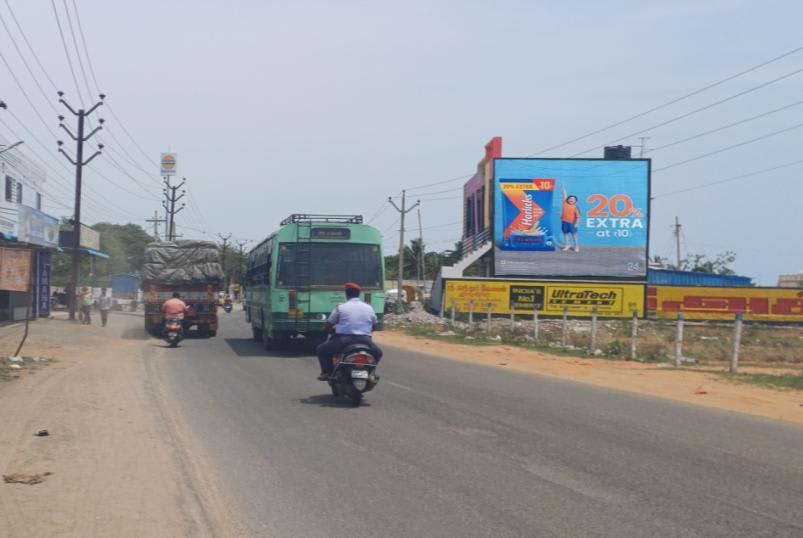
Property Details
Property TypeHoarding
Lit TypeNon-Lit
Size (W x H)25 x 22 Feet
Square Feet550 sq ft
Traffic Data42k+ unique reach/ week
AvailableImmediately
Rate per Sq Ft₹124 / sq ft
Description
 AI Insights by HoardSpace
Overview
This hoarding is located in Koodankulam, a strategically significant locality in Kanyakumari district, Tamil Nadu. Known primarily as the site of India's largest nuclear power plant, Koodankulam has evolved into a locality with steady local traffic and a unique demographic mix of government employees, technical professionals, and local residents. The area experiences consistent movement due to institutional activity, government facilities, and regional connectivity along the southern Tamil Nadu coastal belt.
Location Highlights
Koodankulam is situated approximately 20 kilometers from Nagercoil, the administrative headquarters of Kanyakumari district, and around 25 kilometers from Kanyakumari town itself. The locality serves as an important point along the coastal road network connecting smaller towns and villages in the southern tip of Tamil Nadu. While not a major commercial hub, the presence of the nuclear power plant and associated residential colonies creates a distinct traffic pattern. The area is characterized by moderate commercial activity, government infrastructure, and residential settlements. The surrounding region includes fishing villages, agricultural lands, and scattered commercial establishments serving local needs.
Traffic & Footfall Insights
Estimated Daily Vehicle Traffic: Approximate estimates suggest 12,000–28,000 vehicles/day along the main road. Traffic primarily consists of two-wheelers, private cars, buses, and commercial vehicles serving the nuclear power plant staff, local residents, and inter-town commuters.
Estimated Daily Footfall: Pedestrian movement is moderate, estimated at 800–2,500 people/day, mainly comprising local residents, power plant employees, and visitors to nearby establishments.
Peak Activity Periods: The locality typically experiences higher traffic during 7:00 AM–9:30 AM and 5:30 PM–8:00 PM, coinciding with shift changes at the nuclear power plant and general commuter movement.
Primary Audience: Government employees, technical professionals, institutional staff, local business owners, daily commuters, and residents of surrounding villages.
Advertising Potential: This hoarding offers consistent visibility to a stable, educated, and relatively affluent audience with regular exposure patterns. The captive audience of power plant employees and their families represents a valuable demographic for relevant brands.
Hoarding Specifications
- Dimensions: 25 ft (width) × 22 ft (height)
- Total Display Area: 550 square feet
- Monthly Price: ₹68,000
- Property Type: Hoarding
- Lighting: Non-Lit (daylight visibility only)
- Visibility: Clear sightlines for vehicles traveling in both directions
- Suitable Advertisement Size: Full hoarding coverage recommended for maximum impact
Best Suited For
Government schemes and public awareness campaigns, financial services targeting salaried professionals, consumer durables and home appliances, educational institutions and coaching centers, healthcare services and hospitals, FMCG products, automobile brands (two-wheelers and cars), real estate projects in Kanyakumari district, and regional retail brands.
Why Choose This Hoarding?
- Consistent exposure to a stable, educated demographic with regular purchasing power
- Strategic location along a key route serving institutional and residential traffic
- Minimal advertising clutter compared to urban centers, ensuring better brand recall
- Cost-effective opportunity for sustained brand presence in southern Tamil Nadu
- Access to both local residents and inter-district commuters traveling through the coastal belt
- Suitable for long-term campaigns targeting institutional audiences
Campaign Suggestions
- Promote banking products, insurance schemes, and investment opportunities for salaried professionals
- Launch awareness campaigns for government initiatives and public welfare programs
- Advertise consumer electronics, home appliances, and lifestyle products
- Showcase educational institutions, skill development programs, and professional courses
- Highlight healthcare facilities, diagnostic centers, and wellness services available in nearby towns
Important Note
The traffic and footfall figures provided are approximate estimates for the surrounding locality based on its geographical profile, institutional presence, and road hierarchy. These are not measured statistics specific to the hoarding location. The weekly unique reach figure represents an estimate of unique individuals likely to notice this hoarding during one week, accounting for regular commuter patterns. Reliable public measurements for this specific site are unavailable.
Select Campaign Dates
Start Date
Months
End Date (Calculated)
Pricing Details
Monthly Rent Price₹68,000
₹6,600
Mounting Charges (₹5/sqft)₹2,750
Printing and mounting are one-time charges. For subsequent months, only the rent will be applicable.
Total CostDuration: 1.0 Months
₹77,350+ GST
Location Map
Open in Google MapsRecommended Hoardings
Other listings near this location.