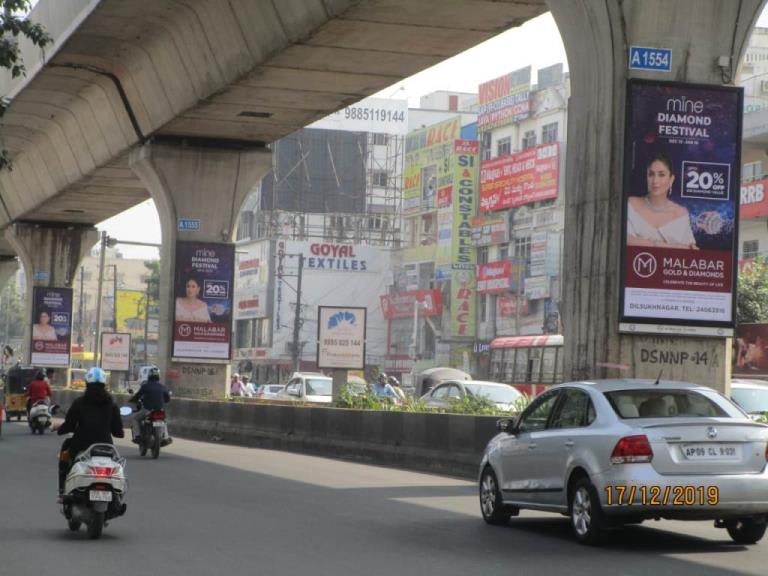
Metro Pillars - C 1 - Dilsukhnagar Malabar Gold to Chaitanyapuri station
Dilsukhnagar Malabar Gold to Chaitanyapuri station, Hyderabad, Telangana
Property Details
Property TypeHoarding
Lit TypeBack Lit
Size (W x H)5 x 10 Feet
Square Feet50 sq ft
Traffic Data74k+ unique reach/ week
AvailableImmediately
Rate per Sq Ft₹1,000 / sq ft
Description
 AI Insights by HoardSpace
Overview
This metro pillar hoarding is strategically positioned along the elevated metro corridor between Dilsukhnagar Malabar Gold and Chaitanyapuri station in Hyderabad. Dilsukhnagar is one of Hyderabad's busiest commercial hubs, characterized by dense retail activity, gold and jewelry showrooms, textile markets, and high-footfall shopping streets. The metro corridor here experiences continuous commuter traffic throughout the day, making it a high-visibility advertising asset for brands targeting middle and upper-middle-class urban audiences.
Location Highlights
Dilsukhnagar is a major commercial and residential junction in southeastern Hyderabad, well-connected via metro rail, TSRTC buses, and arterial roads. The locality is known for its vibrant shopping districts, banking hubs, educational institutions, and multi-specialty hospitals. The proximity to Malabar Gold—a prominent landmark—and Chaitanyapuri station places this hoarding on a stretch frequented by daily commuters, shoppers, office-goers, and students. The area's commercial density ensures consistent exposure to diverse audience segments, including families, young professionals, and retail customers.
Traffic & Footfall Insights
Approximate estimates for this metro corridor locality suggest:
- Estimated Daily Vehicle Traffic: 35,000–65,000 vehicles/day (includes two-wheelers, cars, autos, and buses on parallel roads beneath or adjacent to the metro line)
- Estimated Daily Metro Commuters: 15,000–30,000 passengers/day passing through this corridor segment
- Estimated Daily Footfall: 8,000–20,000 pedestrians/day around metro stations, shops, and bus stops
- Peak Activity Periods: 8:00 AM–10:30 AM, 5:30 PM–8:30 PM, and 12:00 PM–2:00 PM on weekends
- Primary Audience: Daily metro commuters, shoppers, retail customers, office employees, students, and middle-class families
- Advertising Potential: High visibility for brand awareness campaigns targeting urban commuters and shoppers in a high-density commercial locality
These are locality-level estimates and not measured statistics of the hoarding itself.
Hoarding Specifications
- Dimensions: 5 ft (width) × 10 ft (height) — 50 sq. ft. total advertising area
- Monthly Price: ₹50,000
- Property Type: Hoarding
- Lighting: Back Lit (ensures 24-hour visibility and sharp brand recall)
- Visibility: Direct exposure to metro commuters, road traffic, and pedestrians in a bustling commercial zone
- Suitable Advertisement Size: Vertical formats work best; clear branding with minimal text recommended for quick readability from moving vehicles and trains
Best Suited For
- Jewelry and gold retailers
- Fashion and apparel brands
- Banking, financial services, and insurance products
- Consumer electronics and mobile brands
- Quick-service restaurants and food delivery apps
- E-commerce platforms and retail chains
- Real estate projects targeting Hyderabad's middle-class buyers
Why Choose This Hoarding?
- Located on a high-traffic metro corridor in one of Hyderabad's busiest commercial neighborhoods
- Back-lit format ensures round-the-clock brand visibility and impact
- Positioned near Malabar Gold and Chaitanyapuri metro station—two key landmarks with high daily footfall
- Captures attention of daily metro commuters, ensuring repeated brand exposure throughout the week
- Ideal for local and national brands aiming to penetrate Hyderabad's middle and upper-middle-class market segments
- Cost-effective monthly pricing for a premium commercial locality with sustained audience engagement
Campaign Suggestions
- Jewelry brands can promote festive collections, wedding offers, or new showroom launches
- Banks and fintech companies can advertise zero-balance accounts, personal loans, or digital payment solutions
- Retail and fashion brands can highlight seasonal sales, exclusive collections, or store openings
- Real estate developers can showcase upcoming residential or commercial projects in nearby localities
- Food and beverage brands can use engaging visuals to drive app downloads or footfall to nearby outlets
Important Note
The traffic, footfall, and reach figures mentioned above are approximate estimates based on the surrounding locality's commercial profile, metro ridership patterns, and typical urban traffic density. These are not direct measurements of the hoarding's actual impressions. Weekly unique reach is estimated considering repeated commuter exposure and locality characteristics.
Select Campaign Dates
Start Date
Months
End Date (Calculated)
Pricing Details
Monthly Rent Price₹50,000
₹600
Mounting Charges (₹5/sqft)₹250
Printing and mounting are one-time charges. For subsequent months, only the rent will be applicable.
Total CostDuration: 1.0 Months
₹50,850+ GST
Location Map
Open in Google MapsRecommended Hoardings
Other listings near this location.