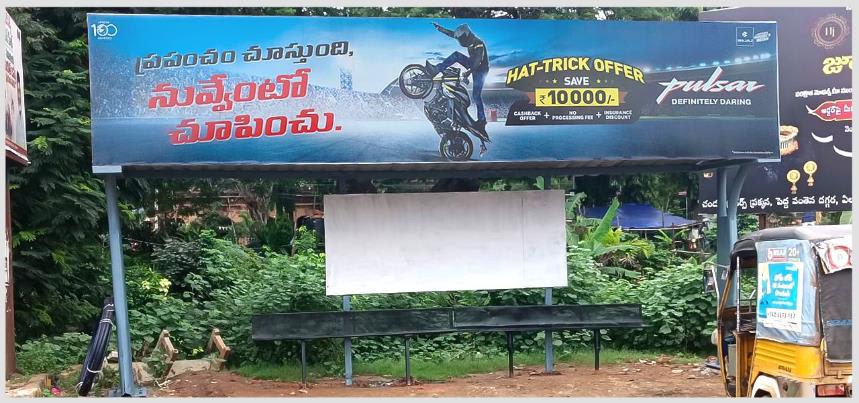
District Bus Shelter - BQSELU-21 - Appalaraju Hotel Opposite - 6×5+25×5+6×5
Appalaraju Hotel Opposite, Eluru, Odisha
Property Details
Property TypeHoarding
Lit TypeNon-Lit
Size (W x H)6 x 5 Feet
Square Feet30 sq ft
Traffic Data28k+ unique reach/ week
AvailableImmediately
Rate per Sq Ft₹667 / sq ft
Description
 AI Insights by HoardSpace
Overview
This bus shelter advertising hoarding is strategically positioned opposite Appalaraju Hotel in Eluru, Odisha. The non-lit hoarding offers brands an opportunity to reach daily commuters, local residents, and transit passengers in this mid-sized urban locality. The placement at a bus shelter ensures extended dwell time, making it suitable for campaigns targeting middle-class families, students, and working professionals who rely on public transport.
Location Highlights
Eluru is a district headquarters town in Odisha, characterized by moderate commercial activity and residential neighborhoods. The hoarding's location opposite Appalaraju Hotel suggests proximity to a commercial node with food establishments, likely attracting local office workers, shoppers, and daily commuters. The surrounding area typically features a mix of retail outlets, small businesses, educational institutions, and residential colonies. Bus shelters in such localities serve as important transit points connecting different parts of the town and nearby villages.
Traffic & Footfall Insights
Estimated Daily Vehicle Traffic: Approximate estimates suggest 12,000–25,000 vehicles/day pass through this locality, primarily comprising two-wheelers, auto-rickshaws, cars, and local buses.
Estimated Daily Footfall: The bus shelter location may experience 3,000–8,000 pedestrians/day, including bus passengers, nearby shop visitors, and local residents.
Peak Activity Periods: Morning commute hours (8:00 AM–10:00 AM) and evening return traffic (5:00 PM–8:00 PM) witness maximum activity. Lunch hours (1:00 PM–2:00 PM) near the hotel also generate consistent footfall.
Primary Audience: Daily commuters, middle-income families, students, local shoppers, hotel patrons, and small business owners.
Advertising Potential: The bus shelter format ensures prolonged audience exposure as passengers wait for transport. The location opposite a hotel adds visibility among food seekers and meeting attendees. These are locality estimates based on typical district town traffic patterns; reliable public measurements are unavailable.
Hoarding Specifications
- Dimensions: 6 ft (width) × 5 ft (height)
- Monthly Rental Price: ₹20,000
- Property Type: Hoarding
- Lighting: Non-Lit (daylight visibility only)
- Visibility: High dwell time due to bus shelter placement
- Suitable Advertisement Size: Medium-format posters or vinyl graphics
Best Suited For
- Local retail brands and grocery chains
- Banking and financial services
- Educational institutions and coaching centers
- Healthcare providers and clinics
- FMCG brands targeting mass markets
- Mobile operators and consumer electronics
- Local restaurants and food delivery services
Why Choose This Hoarding?
- Extended Audience Engagement: Bus passengers spend several minutes waiting, increasing message retention
- Affordable Entry Point: Competitive pricing makes it accessible for local and regional brands
- Captive Transit Audience: Commuters regularly pass this location daily, building brand recall
- Strategic Commercial Location: Proximity to hotel and retail establishments ensures diverse audience exposure
- Local Market Penetration: Ideal for brands targeting Eluru's middle-class demographic
Campaign Suggestions
- Launch awareness campaigns for new retail stores or service centers opening in Eluru
- Promote educational institutions during admission seasons with course details and contact information
- Advertise banking products, loans, or insurance schemes targeting working professionals
- Run seasonal campaigns for local festivals, sales events, or community programs
- Promote mobile recharge offers, e-commerce platforms, or delivery services popular among daily commuters
Important Note
The traffic volume, footfall figures, and weekly unique reach provided are approximate estimates for the surrounding locality based on typical district town patterns. These are not measured statistics specific to this hoarding. Actual exposure may vary based on seasonal factors, local events, and changing urban dynamics.
Select Campaign Dates
Start Date
Months
End Date (Calculated)
Pricing Details
Monthly Rent Price₹20,000
₹360
Mounting Charges (₹5/sqft)₹150
Printing and mounting are one-time charges. For subsequent months, only the rent will be applicable.
Total CostDuration: 1.0 Months
₹20,510+ GST
Location Map
Open in Google MapsRecommended Hoardings
Other listings near this location.